Wednesday, May 21, 2025

Purified Water Storage and Distribution System for the Cosmetics & Personal Care Industry

 In the cosmetics and personal care industry, product quality and consumer safety are directly influenced by water purity. From facial creams to baby lotions, purified water is used as a base ingredient and as a cleaning agent during production.

The storage and distribution system must ensure microbiologically safe and chemically stable water throughout the production cycle. Built with SS316L stainless steel, the system employs orbital welding, sloped piping, and continuous loop design to prevent microbial growth and ensure smooth drainage. Flow velocities of 1.5 m/s or more are maintained to avoid stagnation.
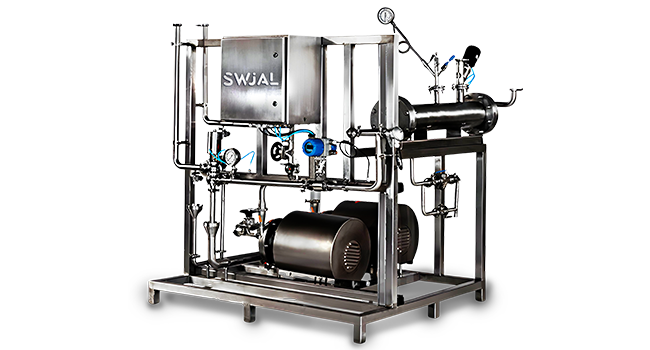
Purified Water Storage and Distribution System for the Cosmetics & Personal Care Industry

Automated systems with PLC/SCADA integration offer control over temperature, conductivity, TOC, and microbial count, with alerts and audit trails to support GMP and ISO compliance. Sanitization may be performed using hot water or ozone systems, and additional measures like UV disinfection may be used for sensitive formulations.

Applications include water used in emulsions, gels, serums, and eye-care products, as well as cleaning of process vessels and pipelines. The system supports allergen-free, preservative-minimized product development, which is increasingly demanded by consumers.

As formulations grow more complex and consumers demand higher product purity, cosmetic manufacturers must adopt water systems that eliminate the risk of contamination. The integration of hygienic valves, high-grade seals, and inline sensors further enhances system reliability and ensures purity at every stage of manufacturing. This provides a consistent base for product performance, skin safety, and customer satisfaction.

Environmental sustainability and branding are also crucial in the personal care market. Companies are now opting for water systems that support green operations through reduced water and energy usage. These eco-friendly solutions not only lower operational costs but also align with clean beauty values and enhance brand credibility.

To conclude, a high-performance Purified Water Storage and Distribution System is vital for maintaining product quality, brand trust, and regulatory compliance in the cosmetics industry.

Purified Water Storage and Distribution System for the Food & Beverage Industry

Water is a major ingredient and cleaning agent in the food and beverage industry. To meet stringent hygiene and safety requirements, a Purified Water Storage and Distribution System ensures the consistent delivery of high-quality water to all points of use.

Food-grade systems are typically constructed with SS316L stainless steel and designed for CIP compatibility. Recirculating distribution loops prevent stagnation and biofilm formation, while the use of hygienic valves and fittings minimizes contamination risk. Flow rates, temperatures, and microbial levels are constantly monitored using PLC/SCADA automation, which helps maintain regulatory compliance with FSSAI, WHO, and other standards.

Sanitization processes include hot water, steam, or ozone treatment to ensure microbial integrity. These systems are validated and documented to comply with HACCP and GMP standards. Applications include the rinsing of packaging materials, ingredient blending, bottle washing, and final rinse before product filling.

Implementing an advanced purified water system improves product consistency, reduces microbial risks, and supports long shelf-life. This makes it an essential investment for any food or beverage manufacturer committed to quality and safety.

Purified Water Storage and Distribution System for the Food & Beverage Industry

With rising consumer demand for clean label and preservative-free products, the importance of maintaining water purity in food and beverage production has never been greater. Any variation in water quality can impact taste, shelf life, and safety. High-purity distribution systems help avoid these issues by ensuring that water used in recipes and rinsing processes remains free from contaminants.

Furthermore, sustainable water systems with energy-efficient features and water recovery mechanisms are becoming increasingly popular. These systems help manufacturers reduce water consumption, cut utility costs, and demonstrate corporate responsibility. With integrated monitoring, they also provide real-time alerts for deviations, enabling swift corrective action before quality is compromised.

Purified Water Storage and Distribution System for the Biotechnology Industry

In biotechnology, the integrity of research and bioprocesses relies heavily on the purity of the water used. A Purified Water Storage and Distribution System tailored for the biotech sector ensures high-quality water reaches every critical point of use, thereby safeguarding sensitive applications like cell culture, fermentation, and media preparation.


The system must meet stringent standards such as USP and EP specifications and be capable of maintaining microbial and chemical purity. Constructed using SS316L stainless steel with orbital welding, the system is designed to minimize microbial growth and contamination. Distribution loops are designed for continuous recirculation with flow velocities exceeding 1.5 m/s, and equipped with ultra-sanitary diaphragm valves, zero dead leg points, and hygienic clamps.

Automation and real-time monitoring via PLC/SCADA allow for comprehensive data logging and immediate corrective actions if parameters deviate. Sanitization is typically done using heat (at 85°C or higher) or chemical agents like ozone. Systems can also integrate UV lamps and fine filters for additional microbial control.

Key applications include the preparation of media for recombinant DNA processes, rinsing of bioreactors, and ensuring the sterility of downstream processes like protein purification. These systems help maintain reproducibility and reduce the risk of batch contamination.

As biotechnology continues to evolve, the complexity of processes increases, demanding even higher standards of water purity and system reliability. Advanced purified water systems are being designed with modular architectures that allow for easy customization and upgrades. This modularity ensures that as biotech operations grow or shift focus, the water system can adapt without requiring complete overhauls, thus saving both time and cost.

Additionally, the integration of smart technologies, such as predictive maintenance algorithms and remote diagnostics, offers enhanced control over water system operations. These features help in early detection of issues, minimizing risk to ongoing processes and ensuring uninterrupted research and production. Combined with electronic record keeping, this makes regulatory compliance more manageable and audit readiness a constant.

In summary, a robust Purified Water Storage and Distribution System is indispensable in biotech operations, offering reliability, compliance, and confidence in sensitive biological applications.


Purified Water Storage and Distribution System for the Pharmaceutical Industry

 The pharmaceutical industry demands the highest levels of water purity for manufacturing drugs, injectables, and sterile products. In this environment, the Purified Water Storage and Distribution System plays a critical role in maintaining water quality and ensuring compliance with regulatory requirements such as those set by the USP, EP, and WHO.

Pharmaceutical water systems must be designed to eliminate the risk of microbial contamination and endotoxins. A typical system consists of a high-purity storage tank, distribution loop, and sanitary fittings, all constructed with SS316L stainless steel. The loop is maintained under continuous recirculation to avoid stagnation, typically at a minimum velocity of 1.5 meters per second. Dead legs are minimized or completely avoided by precise engineering and orbital welding, which ensures smooth and crevice-free joints.

The distribution system is automated using PLC or SCADA controls, offering real-time monitoring of key parameters like flow, temperature, conductivity, and Total Organic Carbon (TOC). Clean-in-Place (CIP) and periodic hot water or ozone sanitization are incorporated to maintain microbial control. Validated systems also generate audit trails and reports required for GMP and FDA compliance.

Pharmaceutical High Purity Water Storage and Distribution Plant

Applications in this sector include water for oral liquids, injections, cleaning of equipment, and rinsing of containers. Any compromise in water quality could result in product recalls, making these systems not just a utility, but a cornerstone of product safety.

In addition to quality and compliance, operational efficiency is another major advantage of using advanced purified water storage and distribution systems. With integrated automation, pharmaceutical manufacturers can track system performance in real-time, predict maintenance needs, and reduce downtime. This results in lower operational costs and higher productivity. The flexibility of design also allows the system to scale as production needs increase, making it future-proof and adaptable to expanding business requirements.

Moreover, energy efficiency and sustainability have become critical factors in pharmaceutical manufacturing. Modern water systems incorporate energy-saving features such as variable frequency drives (VFDs), heat recovery units, and eco-friendly sanitization methods. By investing in such sustainable systems, pharmaceutical companies not only reduce their environmental footprint but also demonstrate commitment to responsible manufacturing practices.

In conclusion, a well-designed and validated Purified Water Storage and Distribution System ensures consistent quality, operational efficiency, and regulatory compliance in pharmaceutical manufacturing.

Industrial Water Storage and Distribution System Design for Critical Applications

 In industries where precision and safety are paramount—such as pharmaceuticals, biotechnology, semiconductors, and food processing—the qual...